
Understand the operational problem.
The public case describes a delivered supervisory monitoring system for a solid-waste-related application. Only the general monitoring concept and interface organisation are presented.
Project at a glance
- Application
- Multi-area equipment visualisation
- Documented interface
- Overview and area navigation with equipment states
- New-project discussion
- Tag ownership, read/write permissions and optional data history
The control challenge
Multiple equipment areas make it difficult to find the status information that needs attention. The overview and detailed area screens must remain consistent.
Bring the layers together.
Conceptual control structure — an illustration, not a project screenshot or live data.
Gather the agreed information
Define how equipment states and relevant values are supplied by the field control systems.
Use a consistent visual language
Group equipment graphics, state indicators and parameter areas so that operators can recognise the same conventions on different screens.
Navigate by operational area
Organise an overview, area views, and separate alarm and parameter entry points instead of presenting all information at once.
What this example demonstrates.
The public report states that the complete supervisory system was delivered. This summary demonstrates the interface concept and scope; it does not claim additional historian, trend or reporting features that are not evidenced in that case.
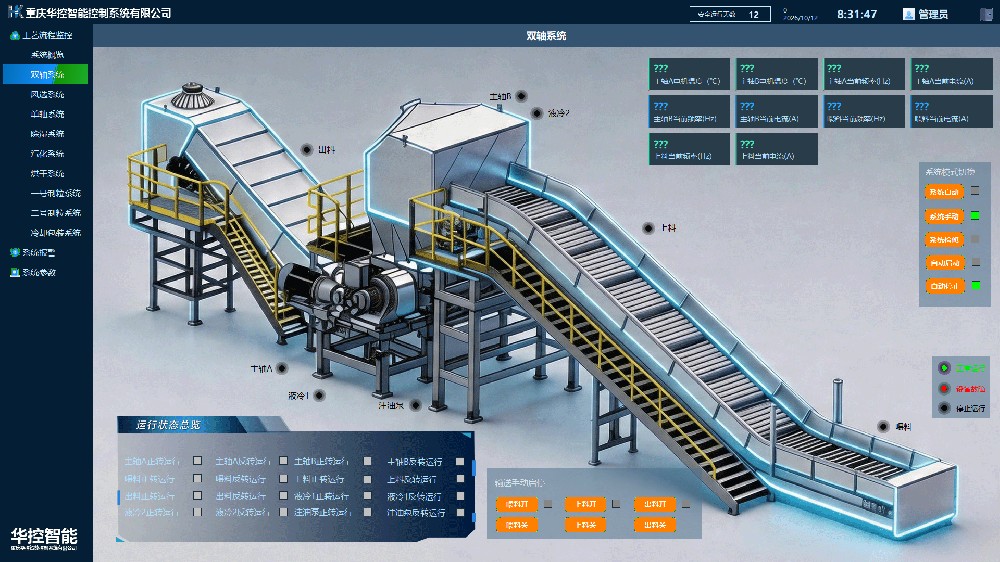
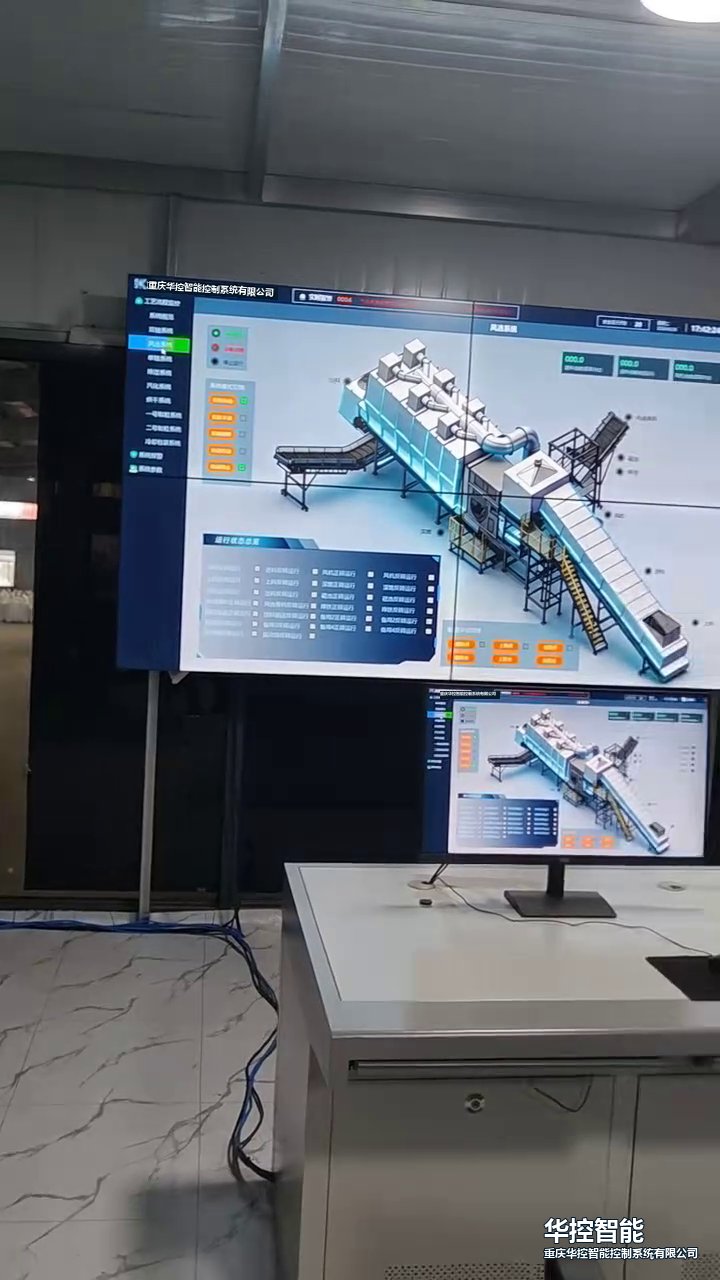
The gallery includes a screen extract and a display-console still already published with Huakong branding. Screen labels, states and values are historical. The separate architecture illustration is not a screenshot and contains no live process data.
Customer details, network settings, control strategies and engineering source files are intentionally not disclosed. Source screenshots show historical display states, not current plant conditions.
Read the original Chinese caseA similar application starts with your equipment.
Use this case as a discussion reference. The actual hardware, control sequence, interfaces and acceptance conditions need to be agreed for your project.