
Understand the operational problem.
When many industrial keys are issued and returned throughout the day, the system must keep the person, key identity, storage location and physical movement aligned. The published project addresses that requirement with modular master and storage cabinets, individual key boxes and an automated handling mechanism.
Project at a glance
- Published design configuration
- 2 cabinet groups · 6 storage cabinets · at least 690 positions
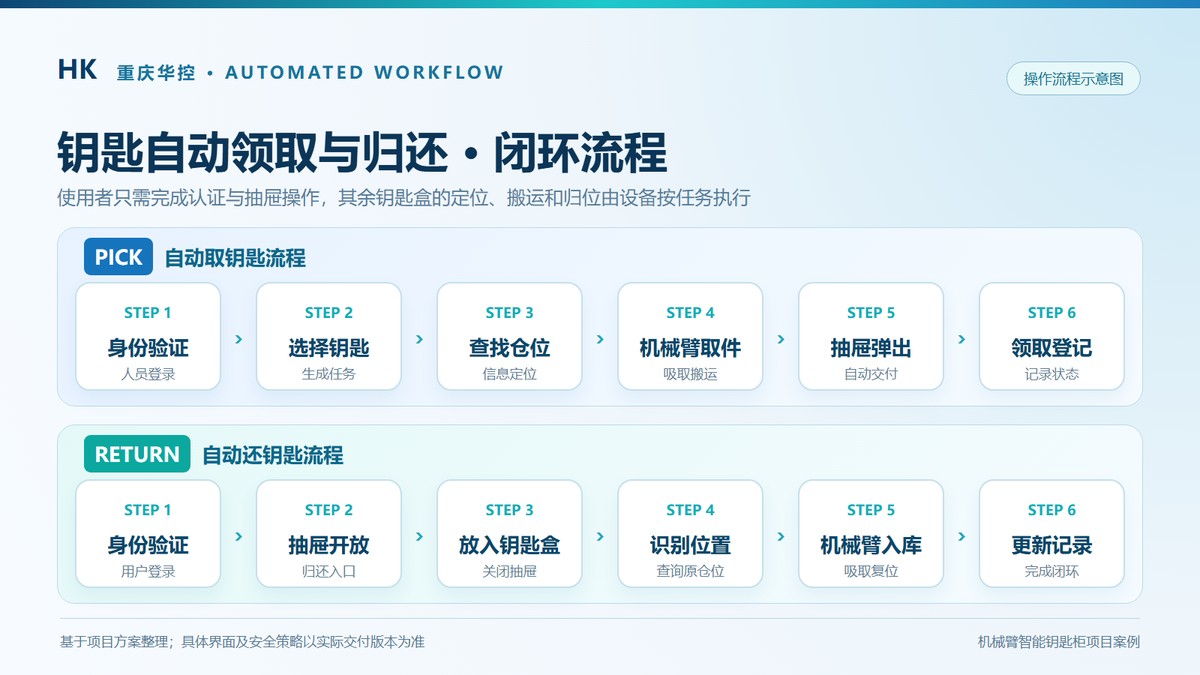
- Retrieval path
- Identify user → select key → locate box → transfer → issue record
- Return path
- Identify user → return drawer → locate assigned slot → store → update record
The control challenge
A successful transaction needs more than reaching a coordinate: the requested box must be identified, moved through the correct sequence and handed to the user, with its location and issue/return state updated consistently.
Bring the layers together.
Conceptual control structure — an illustration, not a project screenshot or live data.
Turn an authorised request into a movement task
The management layer associates each key box with its identity and storage position. After user identification and selection, it creates a retrieval task; returned boxes are associated with their assigned storage positions.
Coordinate positioning and handling
The PLC sequences X/Y/Z positioning, vacuum pickup, transfer, release and drawer operation. Home, limit, drive-fault and execution-state signals form part of the published control description.
Keep retrieval and return organised
The request queue follows the configured priority when issue and return tasks coexist. The management record relates the person, key identity, issue time and return state rather than merely recording whether a cabinet door opened.
What this example demonstrates.
The published article reports completed integration, onsite commissioning and stable use at the time of publication. Its design configuration comprises two cabinet groups, each with one master and three storage cabinets: six storage cabinets and at least 690 key positions. These are reported project configuration figures, not a new capacity test or a guaranteed cycle time.
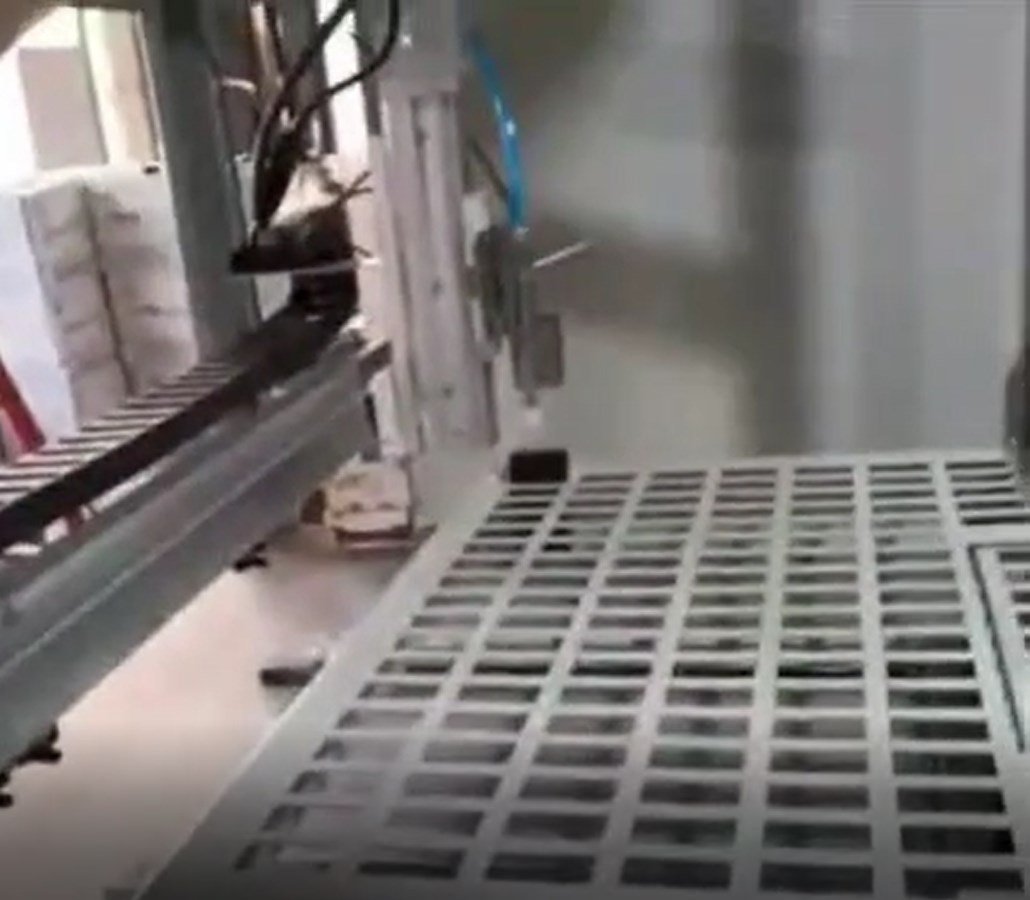
The first gallery image is a frame from the real project operation video. The second is the published explanatory retrieval/return workflow illustration, not a photograph. Its Chinese labels are retained; the operational flow is explained in English below.
The actual movement speed depends on mechanical design and project parameters. Customer identity, installation location, controller addresses and engineering source files are not published here.
Read the original Chinese caseA similar application starts with your equipment.
Use this case as a discussion reference. The actual hardware, control sequence, interfaces and acceptance conditions need to be agreed for your project.